

UX Strategy for a Complex Infrastructure & Staking Platform
Foundry, a Digital Currency Group (DCG) company, provides infrastructure and operational services for organizations participating in digital asset mining and staking networks. Foundry partnered with Upstate Interactive to design a new staking portal intended to streamline operational workflows, improve information sharing, and support multiple institutional user groups through a scalable platform experience.
I led UX research, workflow analysis, interaction design, and interface strategy for the portal, translating highly technical operational requirements into intuitive user experiences for both internal teams and external customers.
The Challenge
The platform needed to support a broad range of operational workflows across multiple permission levels and user types while maintaining clarity, security, and scalability.
Key challenges included:
- simplifying complex blockchain infrastructure concepts
- designing workflows for multiple operational roles
- balancing public and restricted system access
- supporting scalable permission structures
- improving information visibility and operational coordination
- translating technical requirements into approachable UX
The system also needed to establish Foundry as a trusted institutional platform within a highly technical and rapidly evolving industry.
Discovery & Workflow Analysis
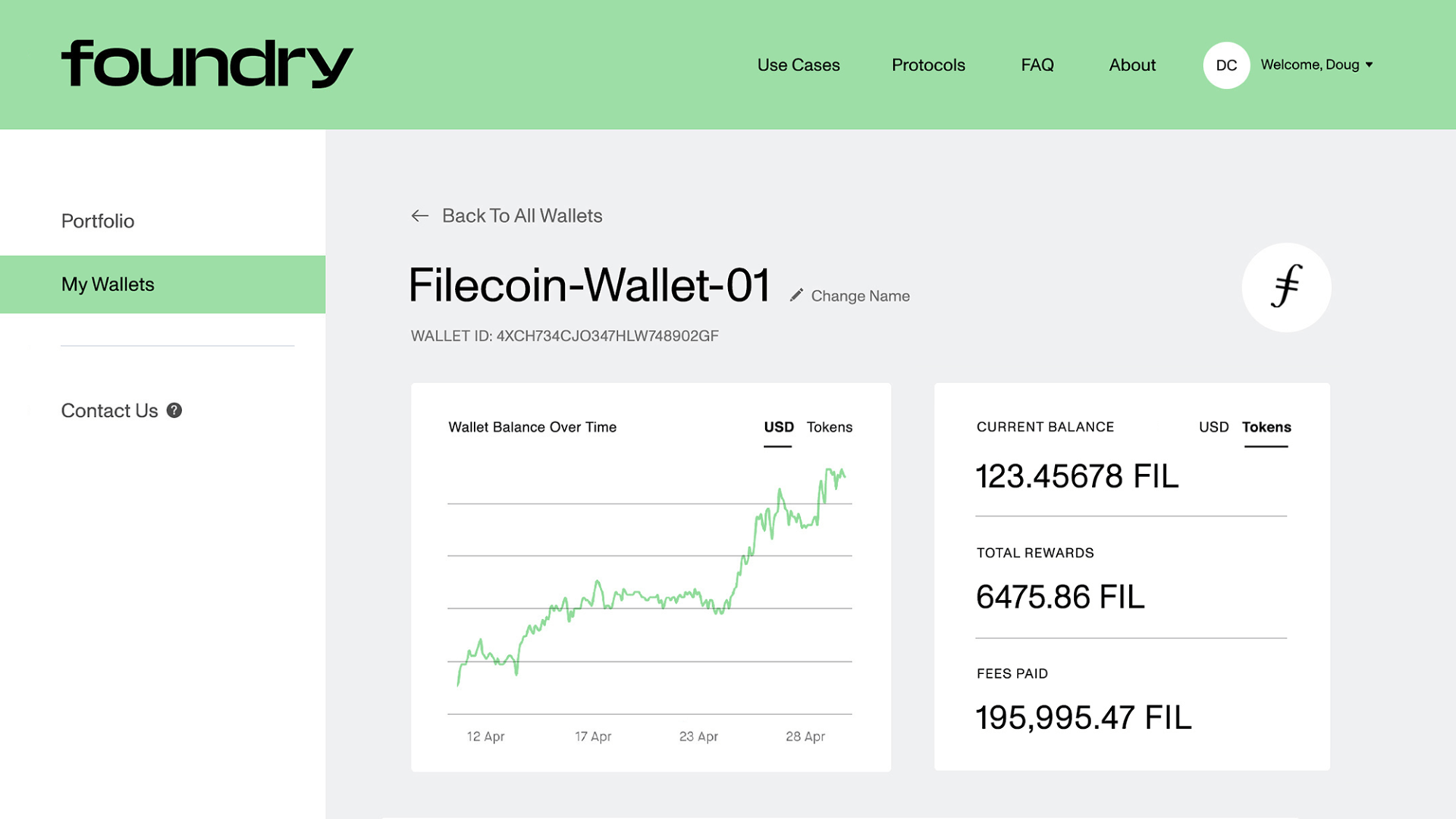
The discovery phase focused on understanding how different operational users would interact with the system and where workflow complexity created friction. User personas and workflow documentation helped align stakeholders around real operational requirements rather than assumptions.
Research activities included:
- stakeholder and end-user interviews
- operational workflow mapping
- permissions architecture planning
- competitor analysis
- behavioral user story creation
- feature recommendation documentation
Research identified six distinct user groups with varying operational needs and system permissions. To support scalability and usability, the platform architecture introduced structured permission tiers across:
- public users
- customer/internal users
- private operational teams
UX Strategy & Interface Design
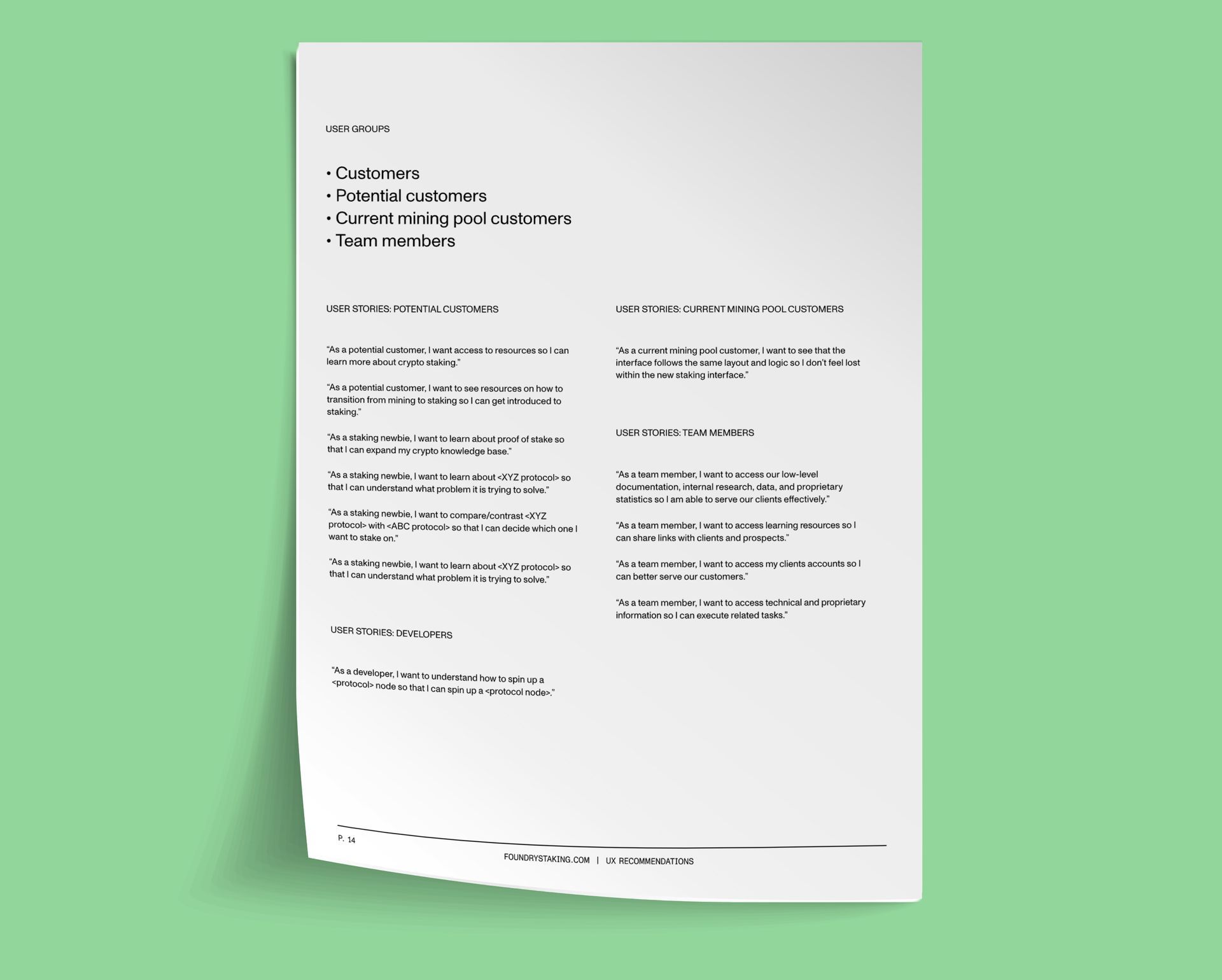
Designed a scalable operational platform that balanced technical complexity with usability through structured workflows, role-based permissions, intuitive navigation, and high-fidelity prototypes for both public and authenticated infrastructure users.
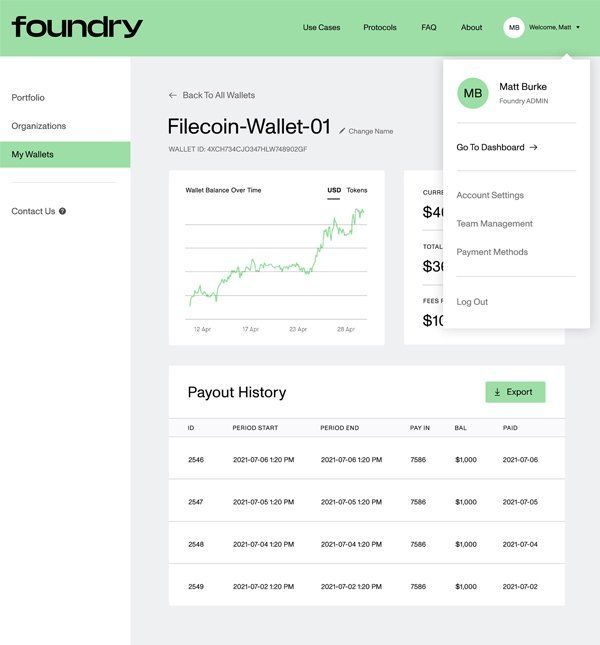
The platform experience emphasized:
- operational clarity
- scalable permissions
- structured navigation
- workflow visibility
- enterprise trust
- simplified technical communication
The design process moved from workflow definition and low-fidelity exploration into high-fidelity interactive prototypes demonstrating both:
- the public-facing platform experience
- authenticated operational portal workflows
The resulting system balanced technical depth with usability, enabling institutional users to navigate complex staking and infrastructure workflows more efficiently.
Design Systems & Engineering Alignment
To support long-term scalability and implementation consistency, I collaborated closely with engineering teams throughout the design process.
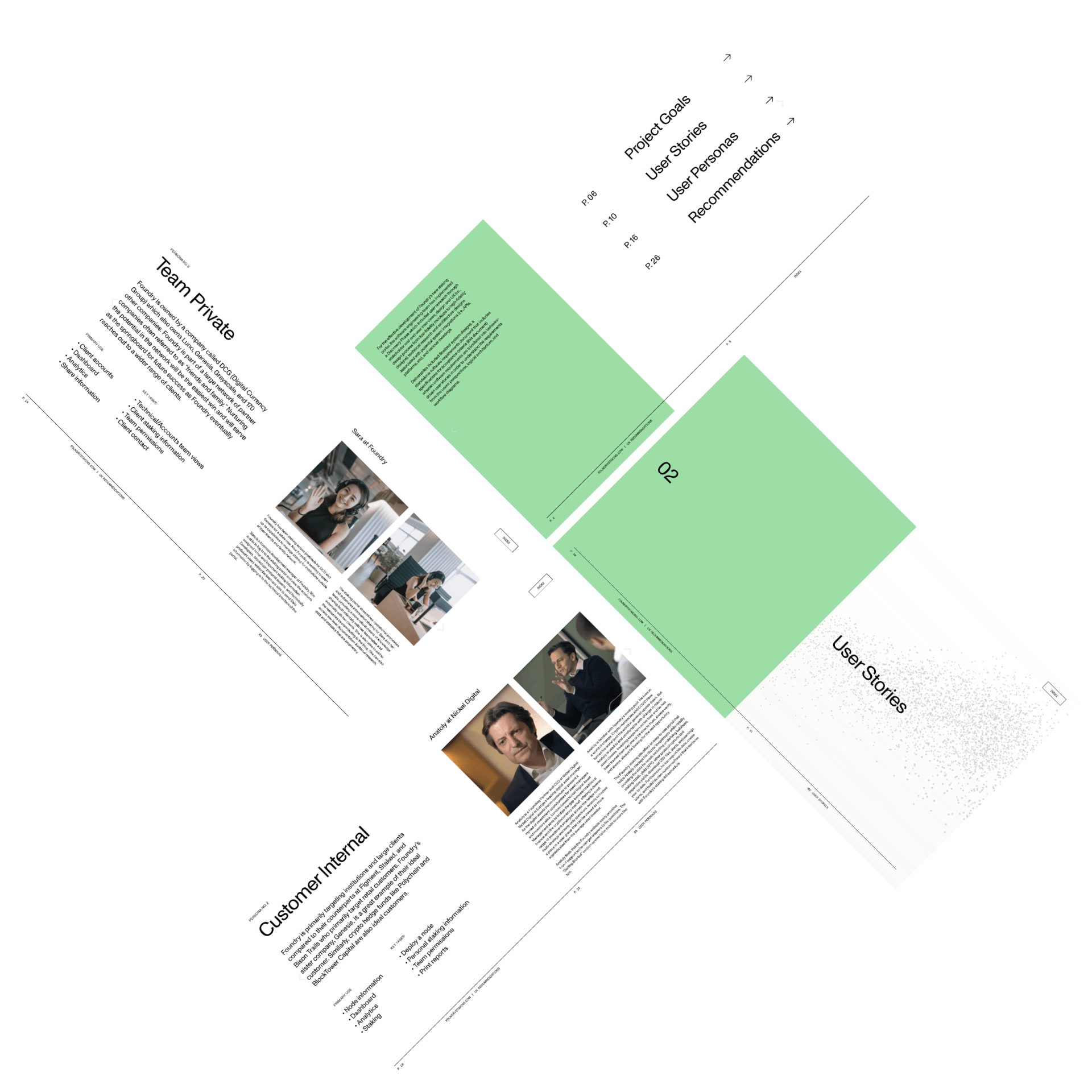
Deliverables included:
- interactive prototypes
- workflow diagrams
- software requirements documentation
- behavior-driven user stories
- design system documentation
- developer-ready specifications
The design system established reusable patterns supporting future platform growth while reducing ambiguity during implementation.
Operational Impact
The project established a scalable UX foundation for a complex blockchain infrastructure platform serving institutional operational users.
The work improved:
- workflow clarity
- operational organization
- role-based usability
- system scalability
- stakeholder alignment
- development readiness
Most importantly, the platform translated highly technical infrastructure workflows into a structured, intuitive experience capable of supporting long-term operational growth.
Let’s talk about your project
Fill in the form or call to set up a meeting at (315) 530-5086 or email me at jlu@jlu.design